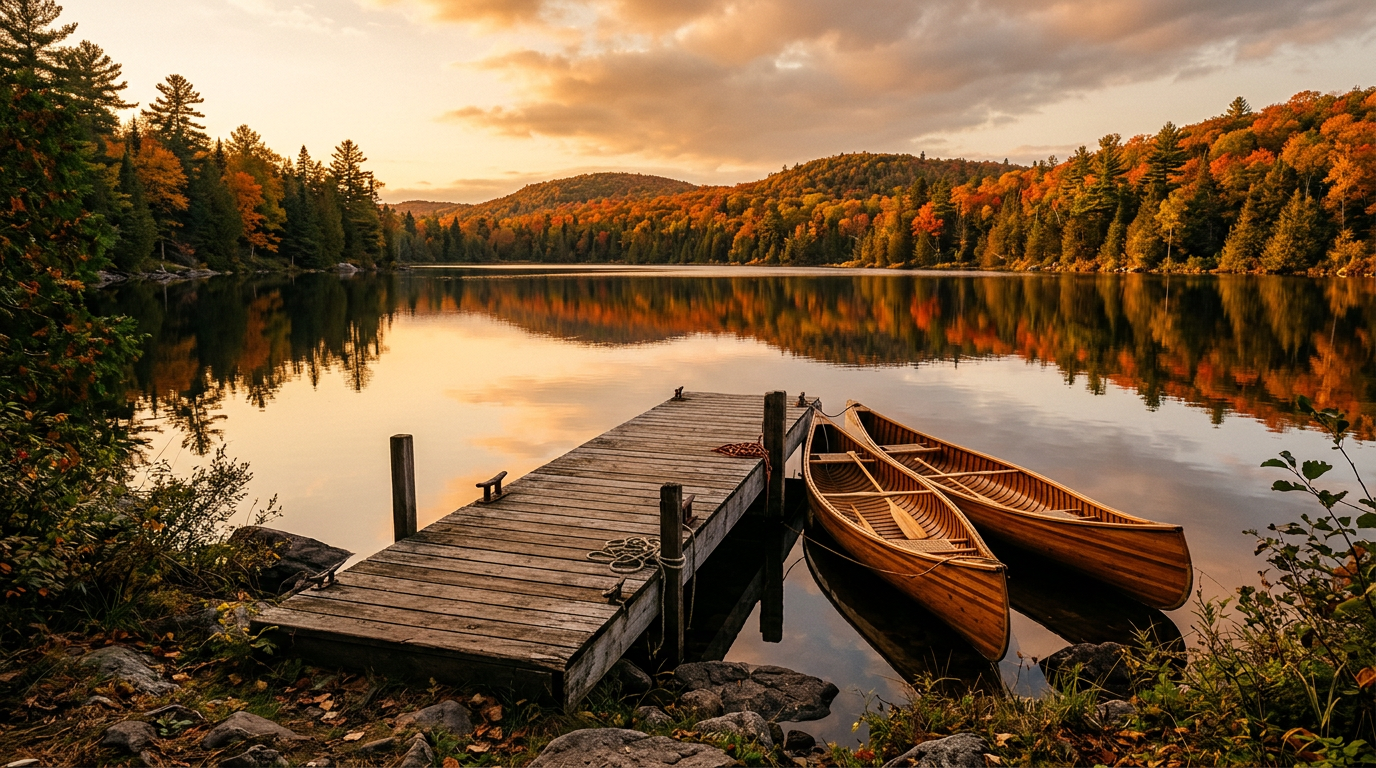
Most Canadians live within a few hours of a landscape that would qualify as a travel destination anywhere else in the world. The challenge is not finding somewhere worth going — it is knowing which corners offer the best combination of authenticity, access, and the specific kind of quiet that a weekend away from the city actually delivers. The eight destinations below have been selected for precisely that balance.
Prince Edward County
Jutting into Lake Ontario east of Toronto, Prince Edward County has transformed over the past fifteen years from a quiet farming community into one of Ontario's most rewarding short-break destinations. The county is home to over 40 wineries, dozens of farm-to-table restaurants, and Sandbanks Provincial Park — which has the largest freshwater sand dune system in the world. The town of Picton serves as the main hub, with independent bookshops, art galleries, and a craft brewery scene that punches well above its small-town size. Spring and fall are quieter than the summer peak; September in particular offers harvest festivals, lower accommodation prices, and the kind of golden light that makes the county's flat farmland genuinely beautiful.
Lunenburg
A UNESCO World Heritage Site on Nova Scotia's South Shore, Lunenburg is one of the best-preserved examples of a planned British colonial settlement in North America. Its colourful wooden buildings climb a hillside above a working fishing harbour where lobster boats still go out every morning. The Bluenose II — a replica of the famous racing schooner on the Canadian dime — is based here. The town's restaurants serve some of the freshest seafood in the country, and the surrounding countryside offers quiet drives through fishing villages that feel genuinely unchanged by time. Halifax is two hours away, making Lunenburg an ideal addition to an Atlantic Canada weekend circuit.
Ucluelet, Vancouver Island
While its better-known neighbour Tofino attracts summer crowds, Ucluelet — just 40 kilometres down the Pacific Rim Highway — offers the same wild Pacific coastline at half the price and a fraction of the traffic. The Wild Pacific Trail winds along the rocky shoreline through old-growth rainforest, with views of sea stacks, breaking surf, and the occasional grey whale. Storm watching in November and December has become its own draw: the Pacific swells that roll in during fall storms are spectacular, and several hotels offer dedicated storm-watching packages with floor-to-ceiling ocean views. The town's fish-and-chip restaurants source directly from the boats in the harbour.
Charlevoix Region
The Charlevoix UNESCO Biosphere Reserve stretches northeast of Quebec City along the St. Lawrence River, encompassing a landscape shaped by a massive meteorite impact 350 million years ago. The result is a dramatic terrain of rolling hills, cliffs dropping to the river, and valleys that trap their own microclimates — conditions that have made Charlevoix a noted gastronomic region. The area's farms, cheesemakers, and distilleries supply a restaurant scene that competes seriously with urban equivalents. Baie-Saint-Paul is the main town, known for its art galleries. The Le Massif ski resort offers Quebec's longest vertical drop in winter. In fall, the foliage along the river road is among the finest in eastern Canada.
Canmore (Outside Peak Season)
Banff is extraordinary and perpetually crowded. Canmore, 20 minutes east along the Trans-Canada, occupies the same mountain landscape with a fraction of the visitors outside July and August. The Three Sisters peaks frame the town from above; the Bow River runs through it at the bottom. Nordic skiing in the Canmore Nordic Centre (a former Olympic venue) is world-class in winter. In spring and fall, the hiking trails on the edge of town are accessible, uncrowded, and often wildlife-rich. The town itself has a genuinely local restaurant and café scene that has developed its own identity quite distinct from the resort character of Banff. Day-trips into the national park remain an option from a Canmore base.
Riding Mountain National Park
Manitoba's most accessible national park rises dramatically from the flat prairie to an upland boreal plateau that feels entirely disconnected from the surrounding farmland. The park protects one of the largest remaining elk herds in Manitoba and has reliable bison viewing at Lake Audy. The town of Wasagaming on Clear Lake offers one of the most idyllic small Canadian resort communities — a boardwalk, heritage-era beach pavilion, and a freshwater lake with no motorised boats. The park's extensive trail network ranges from flat lakeside walks to longer backcountry routes. Wasagaming is a rare example of a national park townsite that has retained its 1930s resort-era character almost entirely intact.
Fundy Trail Parkway
The Bay of Fundy has the highest tides in the world — up to 16 metres between high and low water — and the Fundy Trail Parkway gives access to a 16-kilometre stretch of coastline that remains one of the least-visited spectacular landscapes in eastern Canada. The trailhead is 11 kilometres from St. Martins, a village with sea caves that are accessible only at low tide. The combination of old-growth forest, suspension bridges over coastal gullies, and the sheer drama of watching the tide come in at speed makes this a genuinely distinctive experience. The parkway charges a small entry fee but remains relatively uncrowded even in summer.
Prince Albert National Park
Saskatchewan's only national park protects a transition zone between boreal forest and prairie that supports an unusual diversity of wildlife — black bears, wolves, woodland caribou, and white pelicans are all resident. The park is also home to the former wilderness cabin of Grey Owl, the English-born conservationist who lived here in the 1930s and became one of Canada's most celebrated early environmentalists. The cabin is accessible only by canoe or on foot, which gives the journey genuine purpose. The resort community of Waskesiu on Waskesiu Lake has a relaxed, off-the-grid quality that the better-known national park towns have largely lost to development.
Planning Your Trip: Practical Advice
Most of these destinations are seasonal, and timing matters. The shoulder seasons — late May to mid-June and September to mid-October — typically offer the best combination of good conditions, lower prices, and smaller crowds. Booking accommodation six to eight weeks in advance is advisable for summer weekends at the more popular destinations (Prince Edward County, Canmore, Charlevoix). For the more remote locations, checking road conditions and park access in spring is worthwhile, as some parks do not open all facilities until late May.
All eight destinations are accessible by personal vehicle, and most have some public transport connection to their nearest major city, though the journey times are longer. Parks Canada's Discovery Pass provides unlimited access to all national parks and historic sites for a year at CAD $72.25 per adult or $145.25 per family — genuinely good value if you are planning multiple park visits. Provincial parks charge separate fees, typically CAD $10–20 per vehicle per day.