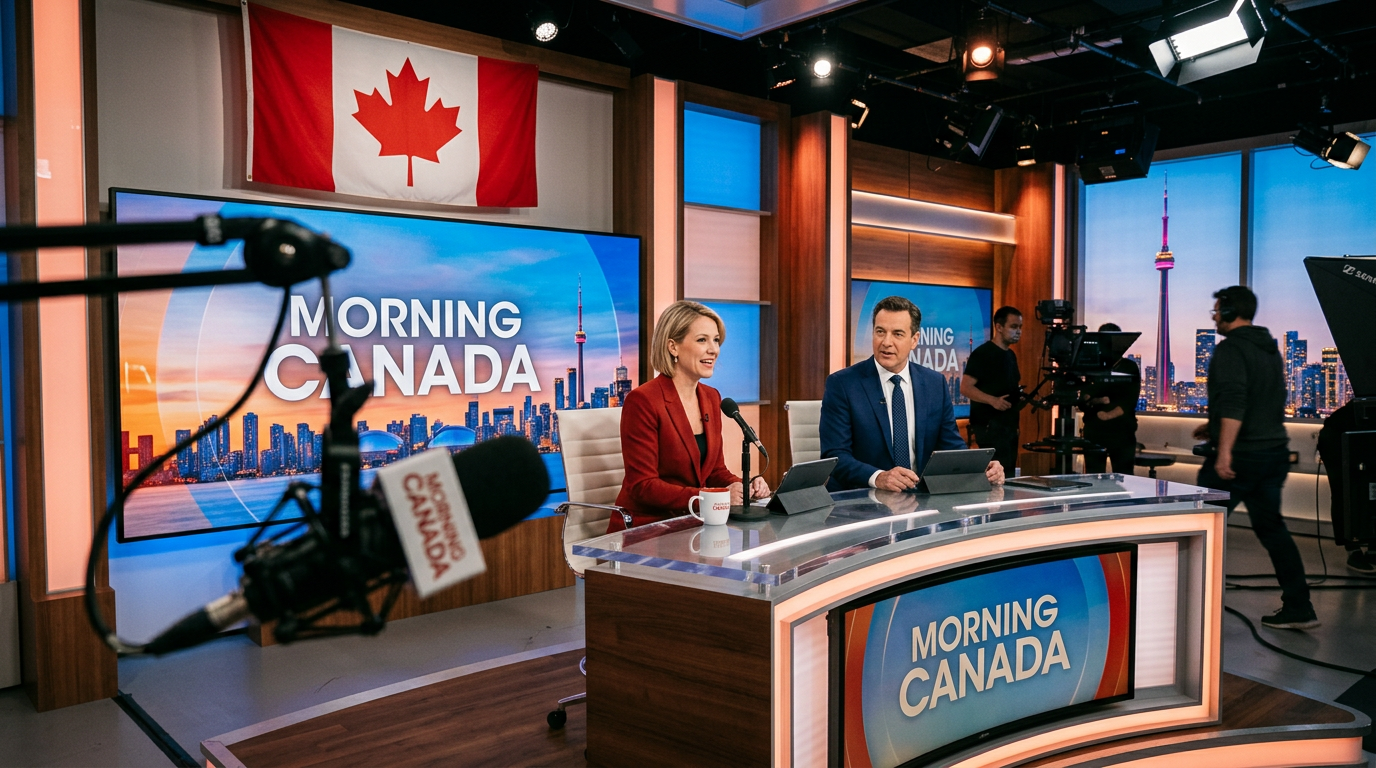
In Canadian broadcasting, the microphone never truly sleeps. Producers, sound engineers, and floor managers do their best to keep things orderly — but in the fast-paced environment of live radio and television, the gap between "on air" and "off air" is often narrower than anyone realises. The results, when they leak through, tend to travel fast on social media and linger long in the memory of anyone who happened to be tuned in.
What follows is a collection of the moments that stood out — incidents that were unplanned, occasionally embarrassing, and almost universally entertaining. They span AM radio in Toronto, morning television on national networks, regional CBC broadcasts, and the political arena. The common thread is simple: someone assumed the microphone was off. It was not.
1. The Toronto Breakfast Radio Slip That Started a Morning
One of the more widely shared recent incidents involved a breakfast radio presenter on a Toronto AM station who assumed her microphone had been cut at the end of a traffic segment. It had not. A candid remark she made to a co-host — colourful enough to raise eyebrows during the morning commute — went out live to the full audience. The presenter realised almost instantly, pivoted into a disarming apology mid-sentence, and laughed it off with enough charm that most listeners responded warmly rather than with complaint. The clip was circulating on social media by mid-morning and became a talking point on competing stations by the afternoon drive. Several listeners called in specifically to say the moment was the highlight of their commute. The presenter later said it was "the most honest thing I've ever said on air — and the one time I didn't mean to."
2. CTV Morning Live's Accidental Backstage Feed
Morning television moves at a pace that makes technical errors almost inevitable. During a commercial break on a popular CTV morning programme, a production feed error briefly pushed backstage audio out to monitors in the green room — and, for a moment, to the network's online live stream. Viewers who happened to be watching the digital feed caught the tail end of a perfectly ordinary conversation between a floor manager and a wardrobe assistant debating whether a presenter's blazer was reading too dark against the studio's lighting setup. The clip ran for roughly forty seconds before the feed was corrected. Entirely harmless, entirely unintended, and entirely the kind of exchange that makes audiences feel they've been let behind the curtain in a way no scripted segment could replicate. The wardrobe team's assessment, incidentally, turned out to be correct — the blazer was changed before the next segment.
3. The Panel Show Host Who Reviewed Her Own Show
During an ad break on a well-known Canadian panel programme, one of the regular hosts leaned across to a colleague and delivered an admirably frank verdict on the segment they had just finished recording. She described it, in terms that were not broadcast-appropriate, as the most chaotic television she had ever been part of. Her lapel microphone was still active. The comment reached the studio floor feed, where a guest waiting in the corridor overheard every word. The exchange made its way onto social media within the hour. The executive producer later gave a brief comment to a trade publication, describing it as "an entirely accurate review, delivered at the worst possible moment." The host, for her part, sent a handwritten apology to the waiting guest, who had found the whole thing amusing.
4. The CBC Weather Presenter Who Couldn't Stop Laughing
Weather segments are rarely the source of comedy, but one CBC regional presenter managed to turn a standard forecast handover into an unexpected highlight. Finishing her segment and assuming the camera had cut back to the anchor desk, she dissolved into laughter at something a colleague had whispered just out of frame. The camera was still rolling. So was her microphone. Viewers caught approximately twenty seconds of uncontrolled giggling before composure returned and the transition was finally completed. The CBC's own regional social media account later shared the clip with a good-natured caption, and it attracted several hundred thousand views within the first day — the kind of warm, genuine response that no amount of scripted content could have generated. The clip remains one of the most-replayed segments ever posted by a CBC regional outlet.
5. The Late-Night Radio Host's Unfiltered Opinion of a Caller
Late-night talk radio occupies a different world from morning television — the audience is smaller, the tone more intimate, and the hosts often more relaxed as a result. One overnight host on a national talk network made the classic mistake of describing a particularly difficult caller to his producer while the studio mic was still live between segments. His assessment was unflattering but, by the account of most who heard it, fairly accurate. The host acknowledged the error immediately at the top of the next segment, which drew more amused calls than complaints. He later reflected in a podcast interview that the moment had generated more listener response than any deliberately planned segment in his career.
6. A Provincial Political Interview That Took an Unexpected Turn
Political broadcasting adds a layer of consequence to hot mic moments that entertainment television largely avoids. During the wrap-up of a provincial affairs programme, a guest politician assumed the interview had concluded when the host began shuffling papers. The camera had not cut. In the roughly fifteen seconds before the feed ended, viewers witnessed a remarkably candid exchange between the politician and his aide about the interview's handling — candid enough that it generated coverage in three major newspapers the following morning. No formal complaint was filed. The broadcaster issued a brief statement acknowledging the technical oversight. The politician's press office declined to comment on the substance of what was said, which most observers took as confirmation that the remarks were accurate.
7. The Sports Commentator and the Honest Half-Time Assessment
Sports broadcasting generates hot mic moments with particular regularity, partly because the pace of live coverage leaves little time for mic management between segments. During a widely watched hockey broadcast, a commentator returning from a commercial break delivered an off-the-cuff assessment of the first two periods that was notably more critical than anything he would have said on air. His microphone picked up every word. Viewer reaction was largely positive — many appreciated the unguarded honesty — though the broadcaster reminded the production team about mic discipline in a memo that subsequently circulated online and became something of a comic footnote to the original incident.
8. The Bilingual Slip on a Montreal Morning Show
Montreal's bilingual broadcast environment produces its own category of hot mic incident, where the language in which something is accidentally broadcast adds a layer of complexity. A presenter on a francophone morning show, believing she had switched to an English-language private feed, made a pointed comment in French about a segment that had just aired. The comment went out in both French and English, since the channel's live stream carried the original audio. The incident generated coverage in both official languages, with commentators in each treating it somewhat differently — a reflection of how the same unguarded moment can carry different weight depending on who is listening and in which language they heard it.
Why Hot Mic Moments Keep Happening — and Why We Love Them
In live television and radio, microphones remain active longer than presenters expect. The cause is sometimes a delayed cut by the sound operator, sometimes a technical fault, and sometimes a miscommunication between the studio floor and the control room. Lapel microphones in particular stay powered until someone physically mutes them — and in a fast-moving broadcast environment, that step is easily overlooked. The phrase used in the industry, "hot mic," simply means a microphone that is live and transmitting when the person wearing or near it does not realise it.
The psychology behind why audiences respond so warmly to these moments is worth noting. Broadcasting is, by its nature, a constructed experience — scripted, rehearsed, carefully lit, and timed. When the construction briefly fails, what audiences glimpse is something that feels more real than the surrounding programming. Presenters become people rather than professionals. The laugh that was never meant to be heard, the honest assessment of a difficult guest, the mundane backstage conversation about a blazer — these are the moments that remind viewers that the people on screen are, in fact, people.
Canadian broadcasters have, by and large, handled these moments with grace. The social media clips that circulate tend to generate affection rather than outrage, partly because the incidents involved are rarely malicious and partly because the presenters involved typically own the moment rather than running from it. In a media environment that increasingly rewards authenticity, the accidental kind turns out to be among the most effective.
For the presenters involved, of course, the experience is almost always unforgettable. Most report that the moment produced more genuine connection with their audience than anything deliberately planned — which raises an interesting question about just how much of broadcast preparation is actually necessary, and whether the best moments are the ones that nobody planned at all.